
AI capability is not AI value
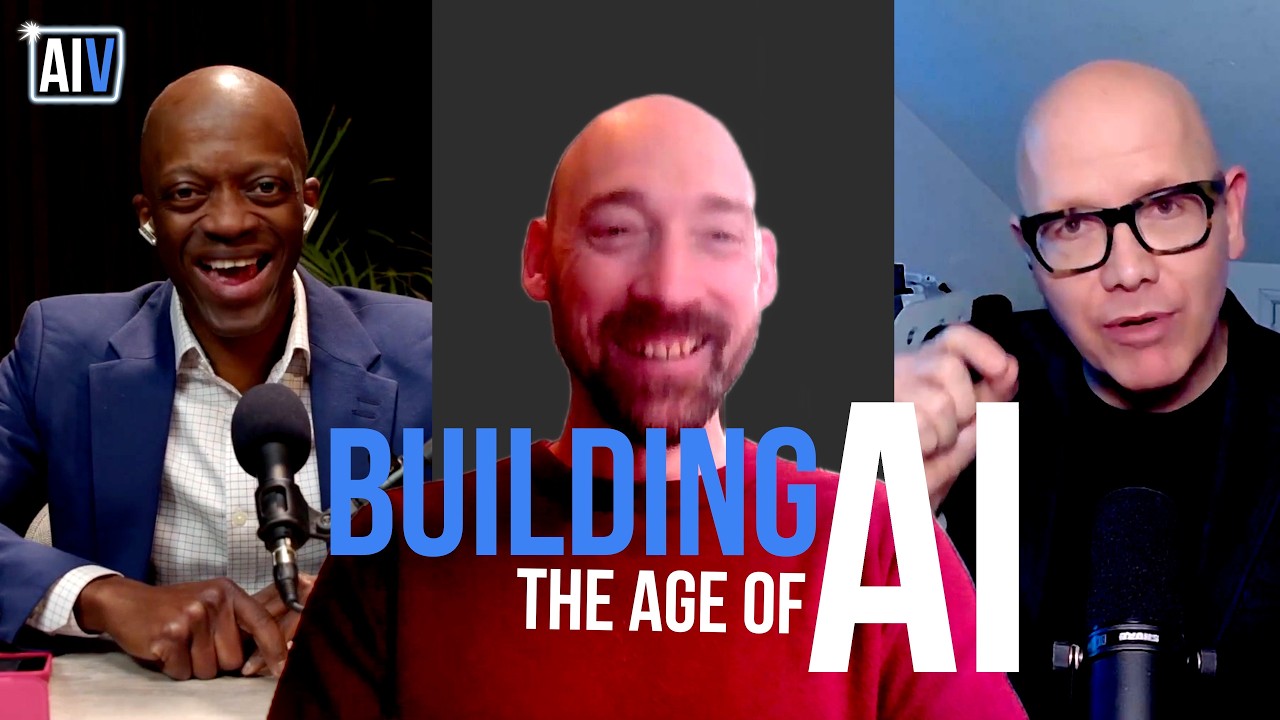
In Episode 13 of The AI Values Podcast, Tolu Adebekun and Edosa Odaro examine why greater AI capability does not guarantee value, and why leadership must keep pace with AI
AI is becoming more capable at extraordinary speed. Models can reason across larger bodies of information, generate increasingly sophisticated outputs, and perform tasks that would have seemed improbable only a few years ago.
But capability creates potential. It does not guarantee value.
For organisations, that distinction matters. An AI system can be technically impressive without improving a meaningful outcome. It can automate more work without making the organisation better. And it can make people faster while amplifying poor decisions, weak processes and existing organisational problems.
Episode 13 of The AI Values Podcast brings Edosa Odaro together with guest co-host Tolu Adebekun for a discussion about what is underneath the race for greater AI capability. Their concern is not simply whether AI will become more powerful. It is whether organisations, leaders and individuals are developing the judgement needed to decide what that power should be used for.
The result is a broader question for AI governance. As capability accelerates, can leadership keep pace?
The real anxiety is human relevance
Much of the public discussion about AI concentrates on technology. Attention moves from one model release to another, from large language models to agents and emerging architectures.
For many people, however, the underlying concern is much more personal.
It is relevance.
People want to know whether their expertise will continue to matter, whether their jobs will exist and whether the skills they have spent years developing will retain their value. For someone entering the workforce, the question may be whether a career path that appeared viable several years ago will still exist. For an experienced professional, it may be whether judgement built over decades can now be replicated by a system.
Odaro describes this as the deeper concern beneath much of the discussion about AI.
"What does it mean for my relevance even within a job? I'm in there, but am I as relevant as I used to be as a human almost?"
These concerns are not restricted to people outside technology. Software engineers, data professionals, cybersecurity specialists and senior executives can face the same uncertainty. Technical proximity to AI does not necessarily provide confidence about what it will mean for someone's future.
This has consequences for organisations. Employees do not leave their concerns at the door when they arrive at work. Anxiety about relevance influences adoption, trust, behaviour and willingness to participate in change.
AI governance therefore cannot be separated from workforce governance. Leaders need to understand not only where AI can be deployed, but what its deployment communicates to the people expected to work alongside it.
AI amplifies the organisation it enters
Organisations often discuss AI as though introducing it will automatically improve the way work is done. That assumption overlooks a difficult reality: technology operates inside existing organisational systems.
If those systems work well, AI can increase their effectiveness. If they work badly, AI can increase the scale of the problem.
Tolu captures this directly:
"Because AI amplifies, right? So the people that are really really good, AI amplifies how good they are."
The same logic applies to organisational behaviour. Poor change management does not become good change management simply because AI is involved. Fragmented decision-making does not become coherent because teams have access to more sophisticated tools. Weak processes can simply become faster weak processes.
Tolu makes the downside equally clear:
"So if you were terrible before, now that you've got AI to magnify that, you're just going to be worse."
This changes how leaders should think about AI readiness. The question is not only whether an organisation has the right data, infrastructure or technical expertise. Leaders also need to examine the quality of the organisational behaviours AI will amplify.
That includes how decisions are made, how teams communicate, how change is managed and how accountability operates when something goes wrong.
AI may expose weaknesses that were previously manageable because their effects remained limited. Once those weaknesses can operate at machine speed and organisational scale, their consequences become much harder to contain.
More capability does not mean more value
The AI industry has become highly effective at demonstrating capability. Models are compared through benchmarks, features and increasingly sophisticated tasks.
The assumption that often follows is that greater capability will produce greater value.
That relationship is far from automatic.
Tolu questions whether part of the problem is rooted in human behaviour itself. People have historically used capability as a proxy for potential. We assess what someone knows, what they can do and what resources they possess. It is therefore understandable that organisations apply similar thinking to AI.
"We do care about capability, almost more than value."
Odaro responds by separating capability from outcome. His analogy is deliberately simple. Possessing more tools does not mean those tools have produced anything useful. Capability creates the possibility of an outcome. Value appears only when the outcome itself improves.
"You can get the biggest spear in the world and whatever else and it's all sitting down there, you've got a pile of them. But none of those actually automatically translates to my family's fed, right?"
For organisations investing in AI, this distinction is fundamental.
More models, more agents, more automation and more computing power are measures of capability. They are not necessarily measures of organisational progress.
Value requires something to become meaningfully better. A process takes less time. A customer receives a better service. Risk falls. Revenue improves. Employees can perform work that previously could not be done. A decision produces a better outcome.
Without that connection, organisations risk counting their AI capabilities while assuming the benefits will eventually follow.
Every AI system contains trade-offs
AI systems do not arrive in organisations as neutral containers of capability.
Choices have already been made about how they operate. Systems prioritise different characteristics, including speed, automation, visibility and forms of judgement. Those choices inevitably involve trade-offs.
As Odaro puts it:
"Every single AI system out there has these trade-offs already built into them."
This matters because many of those decisions are distant from the people affected by them. Organisations may adopt a system without fully understanding which priorities have been embedded within it or who originally determined those priorities.
The governance challenge therefore extends beyond choosing whether to use AI. Leaders need to understand what they are accepting when they choose a particular system.
This becomes especially significant as a relatively small number of technology companies provide AI capabilities used across millions of people and organisations. Decisions made during model development can influence how information is presented, how automated decisions are made and what kinds of behaviour systems encourage.
The question of AI values is therefore not abstract. Values are expressed through choices, and choices are already being made inside the systems organisations deploy.
Responsible AI governance requires those trade-offs to become visible enough for leaders to evaluate whether they align with organisational purpose, acceptable risk and the interests of the people affected.
Leadership has to keep pace with AI
Technical capability will continue to advance. The more difficult challenge may be whether leadership systems can develop quickly enough to govern what becomes possible.
This is not simply a question of AI literacy.
Organisations need mechanisms for making decisions about accountability, trust, risk, value and competing stakeholder interests. They need ways of deciding when automation is appropriate, when human judgement should remain central and how responsibility is allocated when AI influences an outcome.
Odaro frames the challenge directly:
"Do we have leadership systems that are advancing that at a similar sort of pace to what the AI is doing?"
The question becomes more urgent because AI development does not take place in isolation. Organisations compete. Leaders face pressure to move faster because competitors are moving faster. Technology companies face pressure to release more capable products. Governments face pressure to balance economic opportunity with public protection.
Tolu argues that this makes AI as much a leadership problem as a technology problem.
"It's more of a leadership question than it is even a technology capability question."
Speed can make poor leadership more consequential. Competitive pressure can encourage organisations to deploy systems before responsibilities are clear or before affected groups have been properly considered.
The answer is not necessarily to stop technological development. It is to ensure that leadership capability receives comparable attention.
Boards and executive teams need decision systems capable of addressing the speed, scale and uncertainty that AI introduces. Otherwise, organisations risk placing increasingly powerful technology inside governance structures designed for a much slower environment.
Governance cannot become a twenty-page document
One response to greater AI risk is to create more policies, frameworks and documentation.
Documentation has a role, but volume should not be confused with effective governance.
Tolu poses the question:
"It's 20 pages! What CEO is going to read 20 pages?"
The observation points to a practical problem. Governance only works when it can influence decisions. A comprehensive framework that senior leaders cannot understand or use may satisfy a procedural requirement while doing little to improve judgement.
Boards and executives operate under significant constraints on their attention. They do not need every technical detail, but they do need enough clarity to understand the decisions they are being asked to make.
Effective AI governance should therefore make complexity manageable without pretending that the underlying issues are simple. Leaders need clear visibility into purpose, material risks, significant trade-offs, accountability and expected outcomes.
This is particularly important as AI becomes embedded across functions rather than remaining confined to specialist teams. Governance must become part of normal organisational decision-making rather than a separate technical exercise.
The objective is not to give every executive a detailed understanding of model architecture. It is to give decision-makers enough information to exercise meaningful judgement.
Listen to Episode 13
Going deeper: AI governance is becoming leadership governance
The most significant implication from Episode 13 is that AI governance cannot remain the responsibility of technical specialists alone.
AI increasingly affects workforce design, customer relationships, organisational structure, risk, accountability and the distribution of decision-making authority. These are leadership issues.
The challenge becomes particularly significant when capability develops faster than the institutions responsible for governing it. Organisations may have advanced models but outdated approval processes. They may automate decisions without redesigning accountability. They may introduce AI into the workforce without addressing employees' concerns about relevance, skills and trust.
The result can be a widening gap between what organisations are capable of doing and what they are capable of governing responsibly.
Closing that gap requires leaders to treat AI governance as part of the operating model of the organisation. Boards need visibility into material trade-offs. Executives need clearer ways to connect capability to outcomes. Employees need to understand how AI changes their responsibilities and where human judgement remains important.
Most importantly, organisations need to stop assuming that technological progress will resolve organisational weaknesses.
AI can increase capability. It can increase speed. It can increase scale.
Whether those increases produce value remains a human decision.
Key Takeaways
Measure AI success through improved outcomes rather than increases in technical capability.
Assess the organisational behaviours and processes that AI is likely to amplify before scaling deployment.
Make the trade-offs embedded in AI systems visible to leaders responsible for risk and accountability.
Treat employee concerns about relevance and human judgement as governance issues, not simply change-management problems.
Develop leadership and decision systems capable of keeping pace with increasingly powerful AI.
FAQs
Join leaders building AI systems that reflect shared values. New essays, research, and conversations delivered weekly.
More from the Insights Hub
Explore research, frameworks, and conversations on AI alignment, leadership, and human values.

AI creates value when people trust it
David Edem, Vice President Enterprise Data at AVEVA, explains why successful AI projects depend on trust, data quality, stakeholder alignment and business outcomes in Episode 8 of The AI Values Podcast with Edosa Odaro and Lindley Gooden.

AI is intelligence without understanding
Edosa Odaro and Lindley Gooden explore whether AI truly understands the world, the limits of large language models, and why autonomy is ultimately a values question in Episode 11 of The AI Values Podcast.
Why AI is still failing
Jon Cook has spent 30 years in data and AI. In Episode 2 of The AI Values Podcast, he delivers a direct diagnosis of why most AI projects fail — and it is almost never the technology. A production of the AI Values Institute with Edosa Odaro and Lindley Gooden.