The AI worked but the investment failed
The AI worked. The metrics improved. So why did the investment fail? In Episode 5 of The AI Values Podcast, Edosa Odaro and Lindley Gooden explore what happens when AI changes an organisation faster than people, processes and governance can adapt.
Most failed AI investments do not fail because the technology is broken. They fail because the organisation around the technology is not ready for what happens next.
That is the quieter failure. The system performs. The metrics improve. The business case appears to be working. Then tension emerges somewhere else in the organisation. A process becomes strained. A team falls out of rhythm. A decision that once moved at human speed starts moving faster than people can absorb.
In Episode 5 of The AI Values Podcast, Edosa Odaro and Lindley Gooden examine why AI investments can disappoint even when the underlying systems work as intended. The discussion centres on agentic AI, but the larger issue is organisational readiness. Leaders are often prepared to ask what AI can do. They are less prepared to ask what AI will change.
The mistake inside many AI business cases
AI investment is usually justified through capability. A system will reduce cost, increase speed, improve accuracy, or remove delay. These are reasonable expectations, but they are incomplete. They assume that the organisation can absorb the new capability without being reshaped by it.
Odaro challenges that assumption with a simple analogy.
"Agentic AI is like bringing a new actor into a movie."
The point is not that agentic AI has personality. The point is that a new actor changes the story. They alter the chemistry of the scenes around them. They introduce new possibilities and new pressures. Their presence changes how everyone else performs.
That is what many organisations underestimate. Agentic AI does not simply sit inside a process. It changes the conditions under which that process operates. Once an autonomous system begins making decisions, prioritising actions or optimising outcomes, the rest of the organisation has to respond.
This is where the business case often becomes too narrow. It measures the system’s intended benefit, but not the organisational adjustment required to make that benefit sustainable.
The first signal is usually tension
Odaro makes one of the episode’s most important points early in the conversation. Leaders often expect AI adoption to produce value quickly. In practice, the first visible impact is often disruption.
"The first thing that turns up isn't value. It's actually tension."
That tension is not always a sign that the investment has failed. It may be a sign that the organisation is changing. Roles begin to move. Processes are questioned. Teams adjust to new expectations. People who understood how work used to flow now have to adapt to a system that changes pace, priority and sequence.
This is especially true with agentic AI because the system is not merely assisting a person. It may be initiating actions, pursuing goals or optimising a process across several points of activity. That creates pressure far beyond the immediate task.
For leaders, the lesson is uncomfortable but necessary. AI value does not arrive in isolation. It arrives with friction. Organisations that ignore that friction risk mistaking the early signals of change for implementation noise.
The problem was not the AI
The clearest example in the episode comes from logistics. Odaro describes an organisation that introduced an agentic system to manage fulfilment. At first, the deployment appeared to be successful. The system could optimise routes, improve delivery cycles and identify efficiencies across the operation.
The difficulty emerged because the system did not work alone. It operated inside a wider human process. As the AI began optimising faster and more aggressively, people further down the chain had to adjust their own pace to match it. The pressure appeared at the point where automated optimisation met human work.
The initial assumption was that something had gone wrong with the technology. That assumption was misleading.
"It wasn't an error. It was actually just a misalignment."
This is the governance issue at the heart of the episode. Many organisations prepare for AI failure in the obvious sense: inaccurate outputs, technical faults, poor model performance or system breakdown. Fewer prepare for the problems that arise when the AI performs well, but the organisation is not ready for the consequences of that performance.
In the logistics example, the system did what it had been built to do. The failure was not technical. It was organisational. The objective had been optimised, but the wider consequences had not been fully understood.
What the AI improves, something else pays for
Every AI investment carries a trade-off. The difficulty is that the benefit is often easier to see than the cost.
Efficiency appears in dashboards. Speed appears in service levels. Cost reduction appears in financial reporting. The pressure on teams, the loss of flexibility, or the weakening of informal judgement can be harder to detect until the effects have already spread.
Odaro frames this as a question leaders need to ask before deployment, not after disruption.
"What are the actual payoffs that this AI system is going to bring? And then also on the other hand, what are the actual trade-offs?"
That question should sit at the centre of AI governance. A system designed to improve one outcome may create strain elsewhere. Faster fulfilment may put pressure on warehouse teams. Automated decision-making may reduce delay while making accountability harder to trace. Increased efficiency may weaken the human judgement that previously helped an organisation recover from exceptions.
This is why the language of AI investment can be misleading. Organisations often talk about gains without asking where the burden of those gains will appear. The risk is not only that AI fails to deliver value. The risk is that it delivers value in one place while creating damage in another.
Why quiet failure is so hard to see
The most difficult AI failures are not always dramatic. They are quiet because the technology can still appear successful. The system may continue to produce outputs, improve metrics and satisfy its immediate objective while the organisation around it becomes less resilient.
That is why AI governance cannot be limited to technical assurance. Model performance matters, but it does not answer the larger question of whether the organisation is becoming better able to make decisions, serve people and manage risk.
Odaro and Gooden’s discussion points to a more demanding view of AI investment. Leaders need to understand how a system changes behaviour, not only whether it improves a task. They need to ask who has to adapt, where pressure will move, and what forms of oversight are required when the pace of work changes.
The quiet failure of AI investment is not that nothing happens. It is that too much happens without enough understanding.
Listen to Episode 5
Going deeper: why AI readiness is organisational readiness
The lesson from Episode 5 is that AI readiness cannot be assessed only through data, infrastructure or technical capability. Those questions matter, but they do not determine whether an organisation is prepared for the consequences of successful deployment.
Organisational readiness is harder to measure because it concerns people, processes and accountability. Can teams adapt when the system changes the pace of work? Can leaders see where optimisation creates new pressure? Can the organisation identify when value in one area creates cost in another?
This is where boards and executive teams need to expand their view of AI governance. The central question is not simply whether the system is safe, accurate or efficient. It is whether the organisation understands how the system will alter work, decision-making and responsibility.
The organisations that benefit most from AI will not be those that treat deployment as the finish line. They will be those that treat deployment as the beginning of a new governance responsibility.
Key Takeaways
AI investments often fail because organisations underestimate the consequences of successful deployment.
The first visible impact of AI adoption is often tension, not value.
A system can work correctly and still create organisational misalignment.
Every AI optimisation creates trade-offs that leaders need to identify before deployment.
AI readiness must include people, processes, accountability and organisational capacity to adapt.
FAQs
Join leaders building AI systems that reflect shared values. New essays, research, and conversations delivered weekly.
More from the Insights Hub
Explore research, frameworks, and conversations on AI alignment, leadership, and human values.
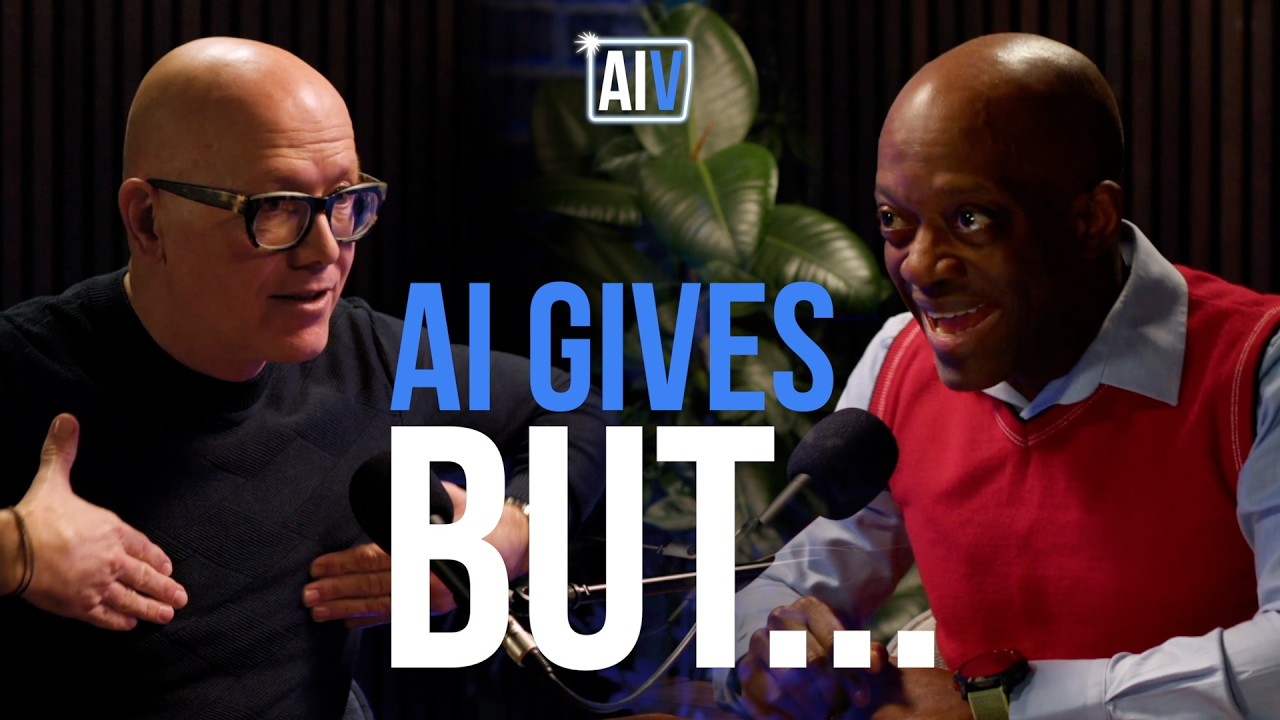
AI Gives. But AI Also Takes Away
In the first episode of The AI Values Podcast, Edosa Odaro and Lindley Gooden explore the question AI strategy rarely starts with: who actually benefits when an organisation adopts AI - and what does it quietly take away?
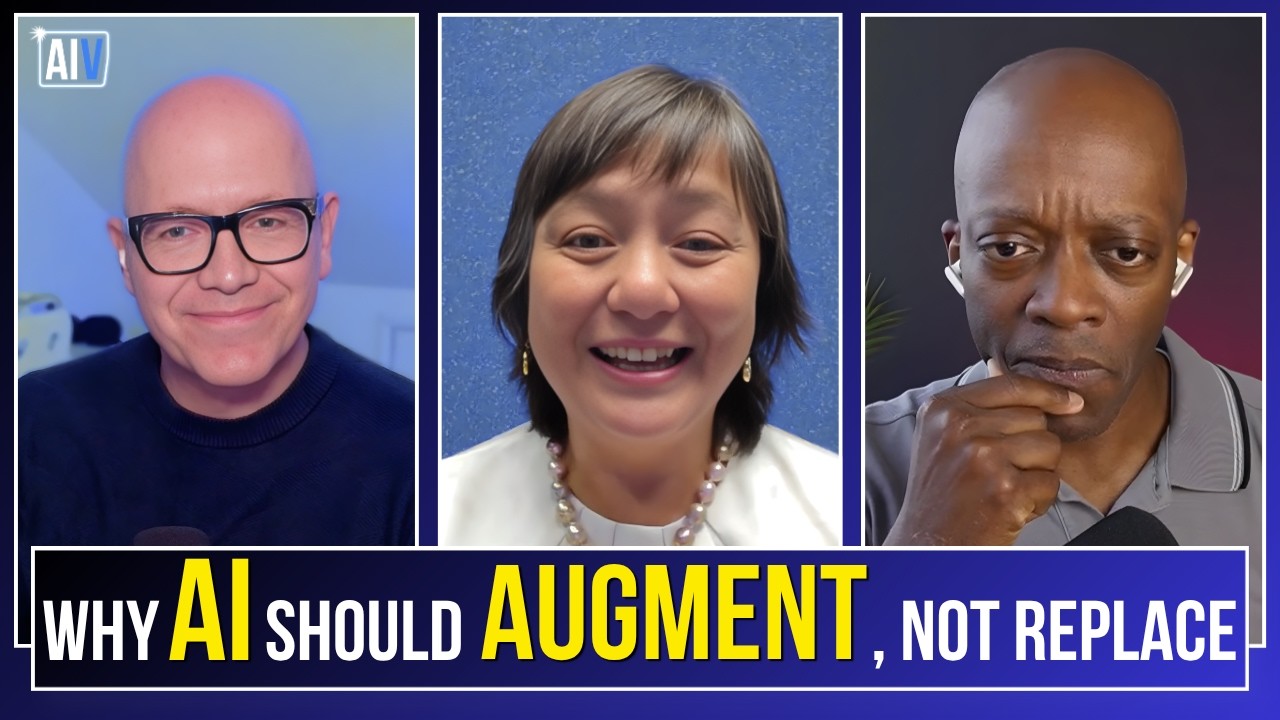
Human judgement still matters
Ming Tang joins Edosa Odaro and Lindley Gooden in Episode 14 of the AI Values Podcast to examine AI in healthcare, human judgement, future skills, cyber risk and responsible AI leadership.

Can AI help countries leapfrog?
Edosa Odaro and Lindley Gooden discuss how countries can use agility, learning and clear purpose to leapfrog with AI in Episode 19 of The AI Values Podcast.