Why AI is still failing
Jon Cook has spent 30 years in data and AI. In Episode 2 of The AI Values Podcast, he delivers a direct diagnosis of why most AI projects fail — and it is almost never the technology. A production of the AI Values Institute with Edosa Odaro and Lindley Gooden.
Between 85 and 95 percent of AI projects fail to deliver expected value. This is not a new statistic. It has been cited for years. And yet the failure rate has not meaningfully improved. The tools have got better. The investment has increased. The rhetoric has intensified. The results have not followed.
In Episode 2 of The AI Values Podcast, Edosa Odaro and Lindley Gooden speak with Jon Cooke - Founder and CTO of Dataception, with over 30 years spanning data, analytics and AI across consultancy, PwC, Databricks and building his own company. His diagnosis is direct and does not spare the organisations he has worked with, or the industry he has built a career in.
The sprinkle AI problem
The most common pattern Jon sees in failing AI implementations is what he calls the sprinkle AI problem. Organisations decide they need to do AI. They identify an existing process. They add an AI layer on top of it. They measure whether the AI layer works. What they never ask is whether the underlying process should exist at all - or whether it should be redesigned from the ground up with AI at the foundation rather than painted on top.
"Companies say they need to sprinkle some AI onto what they do already. Rather than asking - can we actually improve the business?"
The sprinkle AI approach produces AI that technically functions but does not transform. It produces marginal improvements on flawed processes. And it produces the frustration of significant investment with underwhelming return.
Why AI requires experimentation - and why most businesses hate that
Jon's diagnosis goes deeper than process design. The fundamental nature of AI - particularly machine learning - is probabilistic and experimental. It requires iteration, failure, learning, and adjustment. It does not produce deterministic, predictable outputs.
Most organisations are built around the opposite of this. They are optimised for predictability, consistency, and risk avoidance. Experimentation is tolerated in R&D but not in operations. Failure is managed, not embraced.
This structural incompatibility between what AI requires and what organisations are built to do is one of the most underappreciated reasons for implementation failure.
"AI only works if you're willing to fail first. Most organisations are structurally designed to avoid failure. That's the incompatibility nobody talks about."
The political reality: executives quietly kill AI projects
One of the most candid moments in Episode 2 is Jon's account of AI projects that worked - technically, measurably, demonstrably - and were cancelled anyway. Not because the technology failed. Because the results were politically inconvenient.
An AI system that reveals inefficiency implicates the people who created and maintained that inefficiency. A predictive model that shows where resources are wasted creates pressure on the people who allocated those resources. The technology that was supposed to solve a problem instead becomes evidence of a problem - and the people with the power to cancel it do exactly that.
"I've built systems that worked. And I've watched systems that worked get cancelled because the results were inconvenient for someone with power."
The PhD printing faxes
Jon tells a story that has stayed with him. A PhD biochemist whose daily job was to receive a fax, print it, and put it in a drawer. She had been doing it for ten years.
This is not a story about bad management. It is a story about what happens when organisations deploy technology without asking what human capability they are replacing - and whether that capability is genuinely redundant or whether they are simply deciding it is, without asking the person whose expertise it belongs to.
"She had a PhD in biochemistry. Part of her job was to receive a fax, print it, and put it in a drawer. For ten years. That is not a skills problem. That is a values problem."
AI FOMO and the board pressure problem
Jon is direct about one of the most common drivers of AI adoption he encounters: investor and board pressure. 'Our investors say we need to do AI.' This is not strategy. It is FOMO. And it produces the worst possible conditions for successful implementation - urgency without clarity, pressure without purpose, activity without outcome.
When the objective is demonstrating that you are doing AI rather than improving the business, the governance question - what are we actually trying to achieve? - never gets asked. And without that question, the project is already failing before it starts.
Listen to Episode 2
Going deeper: the structural incompatibility at the heart of AI failure
Jon Cooke has worked across some of the most important moments in data and AI: building data practice at a major consultancy, shaping data strategy and governance at PwC, joining Databricks in its early years to build out the EMEA solution architecture team, and founding Dataception to address the gap between business data, technology, and a product mindset. That breadth of experience gives his diagnosis particular weight. He is not theorising about why AI fails. He is reporting what he has observed, repeatedly, across different industries and organisational contexts.
The structural incompatibility he identifies - between what AI requires and what organisations are built to do - is one of the most underappreciated dynamics in enterprise AI adoption. Organisations are optimised for predictability. Their governance structures, their reporting lines, their incentive systems, their risk frameworks: all of these are designed to minimise variance and avoid failure. AI, by its nature, requires the opposite. It requires the willingness to run experiments that may not work, to learn from outputs that are wrong, and to iterate toward something useful rather than specify it in advance.
The organisations that break out of this pattern tend to do so by separating AI experimentation from operational delivery. They create protected space for AI teams to work in a different mode - failing fast, learning faster - while keeping that work insulated from the governance structures that would kill it. Jon's point about politically inconvenient results is connected to this: even when that protected space exists and produces something that genuinely works, the results can threaten the people who control the budget. The most dangerous moment for a successful AI project is not when it fails. It is when it works.
Key Takeaways
Sprinkle AI fails - organisations must redesign processes with AI at the foundation, not bolt it on top
AI requires experimentation - organisations that cannot tolerate failure cannot successfully adopt AI
Political resistance kills projects that work - results that are inconvenient get cancelled
Investor FOMO is one of the most reliable predictors of AI project failure
The human cost of AI adoption is real - ask what you are replacing, not just what you are adding
FAQs
Join leaders building AI systems that reflect shared values. New essays, research, and conversations delivered weekly.
More from the Insights Hub
Explore research, frameworks, and conversations on AI alignment, leadership, and human values.
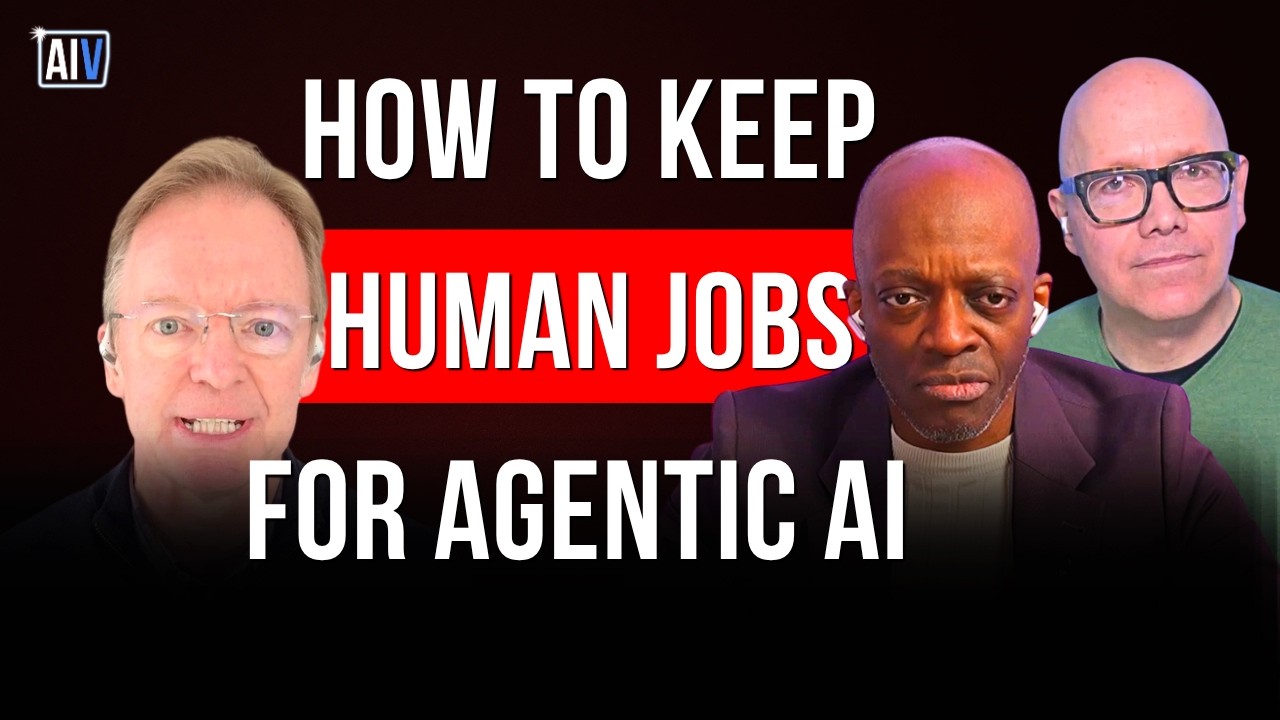
With AI, your workforce is becoming hybrid
In Episode 22 of The AI Values Podcast Tim Carmichael is hosted by Edosa Odaro and Lindley Gooden to discuss leadership in a hybrid AI workforce.

Should humans have to adapt to AI?
Lambert Hogenhout joins hosts Edosa Odaro and Lindley Gooden in Episode 18 of The AI Values Podcast to discuss how AI should serve people.
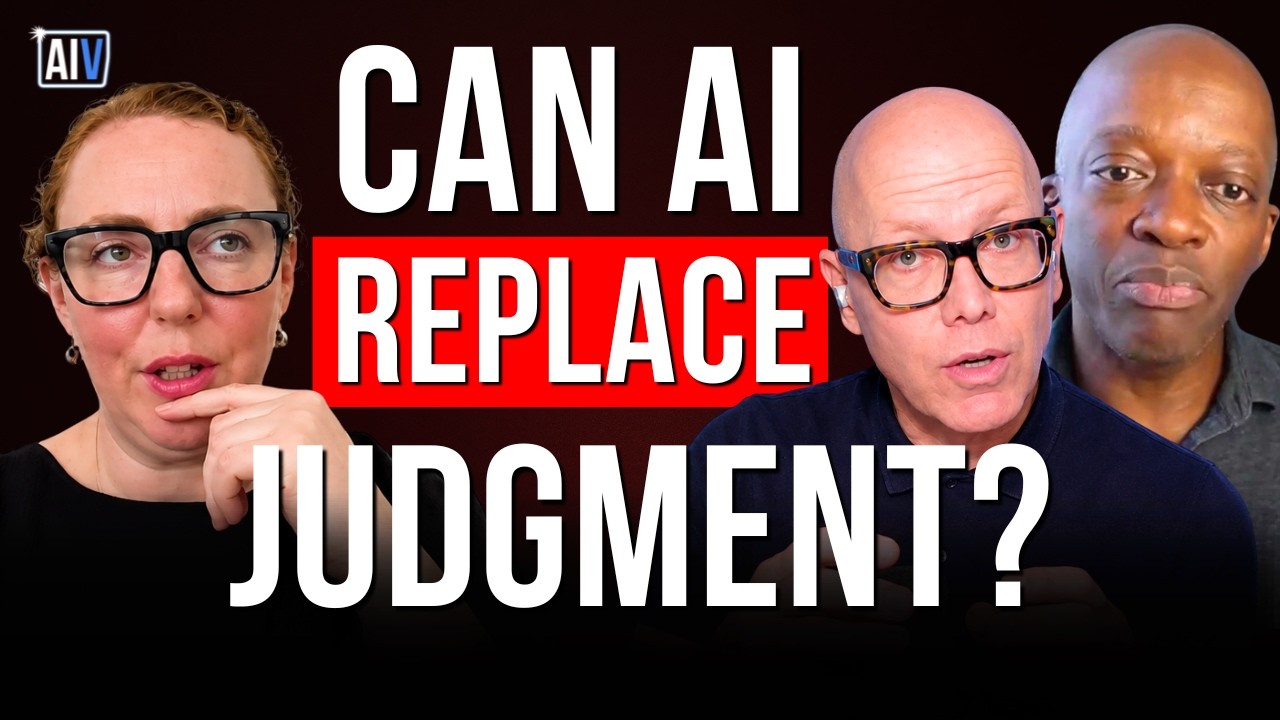
When confident AI gets it wrong
Professor Julie Wall joins hosts Edosa Odaro and Lindley Gooden in Episode 21 of The AI Values Podcast to discuss AI trust, judgement and critical thinking.