
AI has a waste problem before it has a value problem
Nicolas Averseng joins Edosa Odaro and Lindley Gooden to discuss why AI initiatives fail, the foundations trap, value-led AI governance, and balancing value with risk in Episode 12 of The AI Values Podcast.
Organisations continue to invest heavily in data and AI. New platforms are launched, transformation programmes are approved, and teams are tasked with building the foundations for future innovation. Yet despite this investment, a significant proportion of AI initiatives never deliver meaningful value.
Some estimates suggest that as many as 80 per cent of data and AI products are never used.
"Today we estimate that 80% of data or AI products in organisations are actually never used."
This raises an uncomfortable question. If organisations are investing more than ever in AI, why are so many of the products they create failing to generate value?
In Episode 12 of The AI Values Podcast, Edosa Odaro and Lindley Gooden speak with Nicolas Averseng, Chief Product Officer at DataGalaxy and founder of one of the world's first value management platforms for data and AI investments. His argument is straightforward but challenging: many organisations are building infrastructure before they understand the outcome they are trying to achieve.
The result is complexity, waste and growing frustration about the return on AI investment.
The foundations trap
One of the most common assumptions in AI transformation is that organisations need better foundations before they can create value.
The logic is familiar. Build a new data platform. Modernise the architecture. Improve data quality. Create a future-proof foundation. Once those pieces are in place, value will follow.
According to Averseng, this approach often creates the opposite outcome.
"I've seen people spending months, like years, building a new data platform. And at the end, it was so complex that no one managed to build use cases on top."
The challenge is not that foundations are unimportant. Every organisation requires reliable systems and quality data. The problem emerges when infrastructure becomes the objective rather than the enabler.
Many leaders assume they are building towards value when they are actually building towards complexity.
By the time the technology is ready, the organisation often struggles to identify meaningful use cases, generate adoption or connect the investment back to a business outcome. What began as a value initiative gradually becomes a technology programme searching for a purpose.
Start with the outcome, not the platform
The alternative approach discussed in the episode is remarkably simple.
"We need to start from the end. We need to start from the purpose. We need to start with the users."
This principle runs counter to how many organisations approach AI transformation. Technology decisions are often made long before user needs have been properly understood.
Averseng argues that leaders should reverse the sequence. Before building a platform, they should understand who will use the capability, what problem it solves, and how success will be measured. Only then should they work backwards to identify the minimum requirements necessary to deliver that outcome.
This mirrors the logic of successful product development. Organisations rarely design products without understanding customer needs. Yet many AI initiatives begin with discussions of infrastructure and architecture before anyone has clearly articulated the value being created.
The consequence is predictable. If adoption is not designed into the solution from the beginning, it becomes difficult to achieve later.
Purpose should shape the platform. The platform should not define the purpose.
Why so much AI ends up unused
The statistic that 80 per cent of data and AI products go unused should concern every board and executive team.
At first glance, it appears to be a technology problem. In reality, it may be a decision-making problem.
Unused products are often the result of assumptions made early in the process. Leaders assume adoption will happen automatically. Teams assume technical success will translate into business success. Organisations assume value will emerge once the technology is available.
These assumptions frequently prove wrong.
People adopt technologies when they solve meaningful problems. They use systems when those systems improve outcomes. They change behaviour when the value is visible and immediate.
Without those conditions, even technically successful projects can fail.
This is why adoption should be treated as a strategic objective rather than an implementation detail. It is not something that happens after deployment. It should shape decisions from the outset.
The fallacy of efficiency
Few ideas dominate AI discussions more than efficiency.
Projects are justified through promises of automation, productivity gains and reduced costs. Business cases often assume that AI will enable organisations to do more with less.
Averseng challenges this assumption.
"We're going to be 30% more efficient. Then how do you realise that gain?"
The question exposes a gap that many organisations struggle to close.
An organisation may claim that a new AI capability will improve productivity by 30 per cent. The harder question is what happens afterwards. Does the organisation reduce costs? Increase output? Improve quality? Expand services? Redeploy capacity elsewhere?
Too often, these questions remain unanswered.
Efficiency becomes a projected benefit rather than a realised outcome.
This is what Averseng describes as the fallacy of efficiency. Organisations focus on the potential gain without establishing how that gain will be translated into value.
The lesson for leaders is simple. Efficiency is not the outcome. It is only valuable if it enables something else.
The human consequences matter
One of the most important moments in the conversation occurs when the discussion shifts away from technology and towards people.
"There is a big question on how does that impact people?"
AI initiatives do not exist in isolation. They affect employees, customers, suppliers and wider organisational ecosystems. Every productivity gain creates questions about capability, learning and workforce development.
As Lindley Gooden notes during the discussion, organisations that focus narrowly on cost reduction may unintentionally weaken the systems that allow expertise to develop. Reducing headcount can improve short-term financial metrics while reducing opportunities for mentoring, knowledge transfer and organisational learning.
This is why value cannot be measured solely through efficiency or financial return.
Responsible AI requires leaders to understand not only what is gained, but also what may be lost.
The challenge is not whether AI should improve productivity. The challenge is understanding the broader consequences of how that productivity is achieved.
Why value and risk must be considered together
Towards the end of the conversation, Nikola Averseng reflects on the growing influence of AI regulation.
He argues that every value story has a corresponding risk story.
As Averseng explains:
"There is no value story without the downside of it, which is associated risk, associated cost, et cetera. And then you balance that."
Organisations often focus on opportunities while treating governance as a separate exercise. The more mature approach is to evaluate value and risk together. Understanding why an AI initiative exists should naturally lead to questions about consequences, safeguards and accountability.
Averseng argues that this balance is already shaping how organisations approach AI governance.
"The base of the discussion is, you know why you do it? What is the intent? Is the intent worth the risk?"
This is why governance should not be viewed as a barrier to innovation. It is what makes sustainable innovation possible
The real question leaders should ask
Episode 12 ultimately challenges a deeply embedded assumption in AI transformation.
Many organisations begin by asking what technology they need.
The better question is what value they are trying to create.
Averseng captures the problem with a simple analogy:
"It's like if you say, 'We'll cook for you, but first I will build a new kitchen.'"
Technology can accelerate progress, but it cannot compensate for a lack of purpose. Organisations that begin with platforms often find themselves searching for use cases. Organisations that begin with outcomes are more likely to build systems that people actually use.
As AI spending continues to rise, the gap between value and waste may become one of the defining governance challenges of the decade.
The organisations that succeed will not necessarily be those with the most sophisticated technology.
They will be the ones that remain disciplined about why they are building it in the first place.
Listen to Episode 12
Going deeper: waste is a leadership problem
The most striking idea in Episode 12 is that waste should be viewed as a governance issue rather than simply an operational one.
When organisations build products that nobody uses, resources are consumed without creating meaningful outcomes. Budget is spent. Time is lost. Attention is diverted from opportunities that may have delivered genuine value.
Poor intentions rarely cause these failures. More often, they emerge from decisions made far upstream. Leaders prioritise technology before outcomes. Adoption is treated as a secondary consideration. Success is measured through delivery rather than usage.
Responsible AI is not only about safety, ethics and compliance. It is also about ensuring that investments create value for the people and organisations they are intended to serve.
The ability to distinguish between activity and value may become one of the defining leadership capabilities of the AI era.
Key Takeaways
Many AI initiatives fail because organisations prioritise foundations before outcomes.
Adoption should shape implementation decisions from the beginning.
Efficiency gains only matter when they are translated into measurable value.
Value includes people, trust, resilience and risk, not just financial returns.
Effective governance requires balancing opportunity with consequence.
FAQs
Join leaders building AI systems that reflect shared values. New essays, research, and conversations delivered weekly.
More from the Insights Hub
Explore research, frameworks, and conversations on AI alignment, leadership, and human values.

AI is intelligence without understanding
Edosa Odaro and Lindley Gooden explore whether AI truly understands the world, the limits of large language models, and why autonomy is ultimately a values question in Episode 11 of The AI Values Podcast.
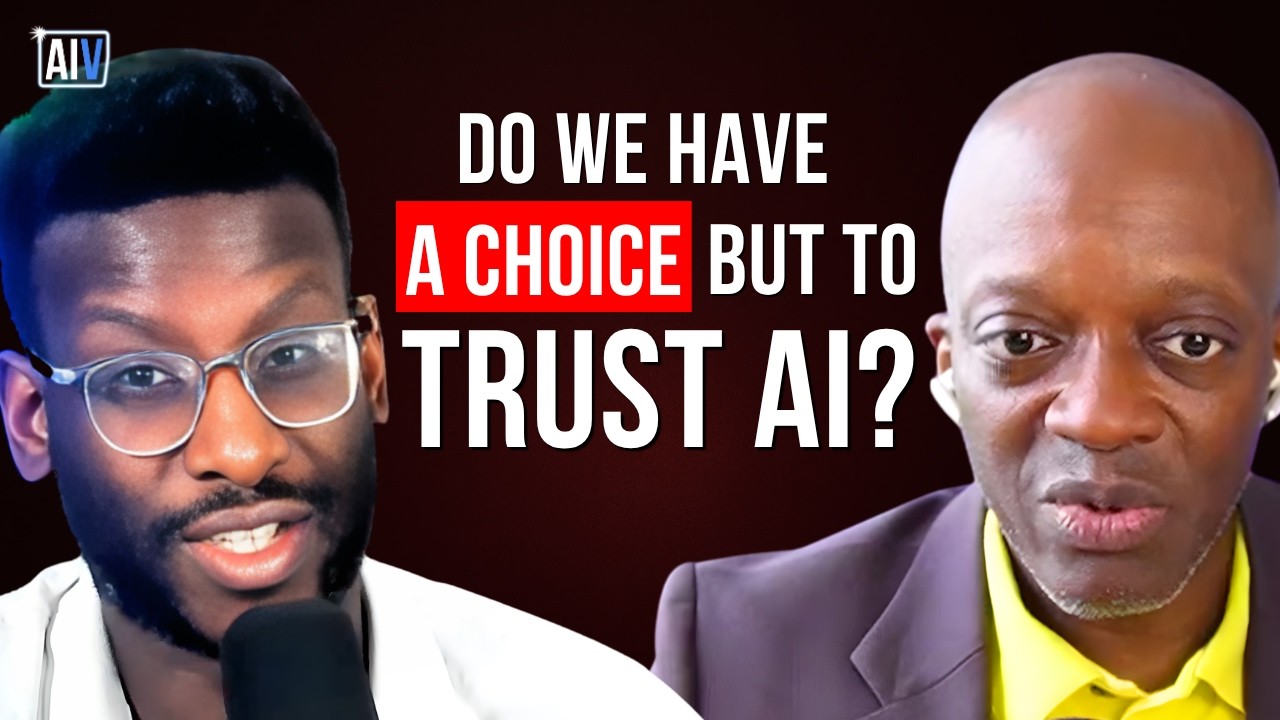
Can we really trust AI?
Tolu Adebekun and Edosa Odaro ask whether AI trust depends more on institutions than technology in Eisode 17 of The AI Values Podcast.

When confident AI gets it wrong
Professor Julie Wall joins hosts Edosa Odaro and Lindley Gooden in Episode 21 of The AI Values Podcast to discuss AI trust, judgement and critical thinking.